WDYT: Shop Together
Catch Social
Role: Product Design Lead
Core Responsibilities: Mobile UX/UI Design | Content Design | Product Strategy
Overview

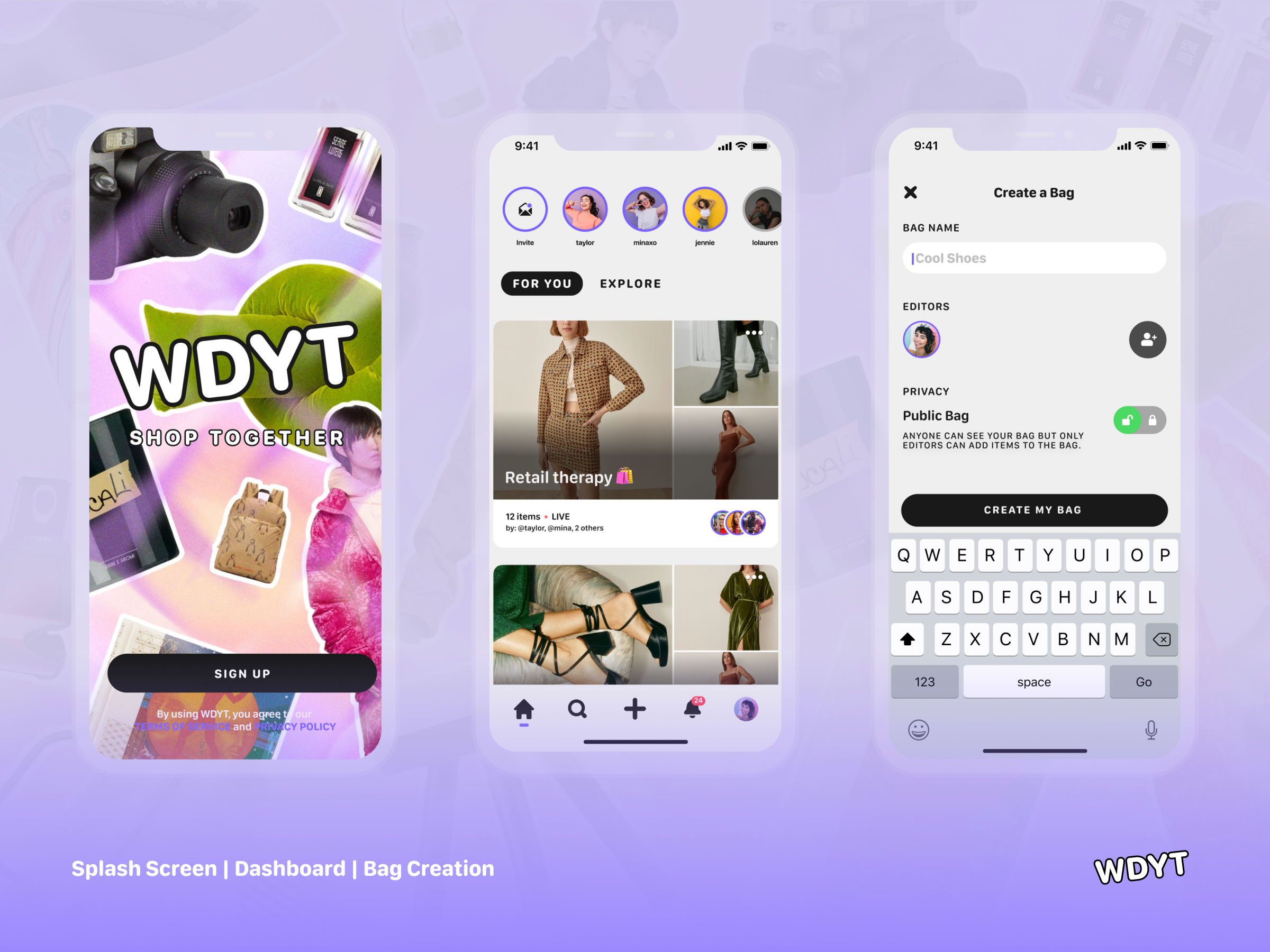
WDYT (What Do You Think?) was a social shopping app that let people browse the internet and shop together in real time with friends, followers, and influencers.
I was the lead and solo designer on the project, so I owned research, feature planning, and the creative and visual direction of the app, along with making sure we were holding to good UX and UI practice as the product grew. I worked very closely with our CEO, who was closely involved in design direction and in building the product, and alongside a team of engineers and a small marketing team where I pitched designs and helped roll out marketing videos and visual content.
Working out who controls a shared bag
The bag is the center of the product, so most of the difficult questions came down to who is allowed to do what to it, and when. Two people editing the same bag at the same time is easy to describe and genuinely hard to make feel good.
We settled on an ownership model. Every bag has an owner, and the owner controls who can drive the browsing, who can edit the bag, and who can only view it. More than one person can browse at once, and more than one person can edit the bag simultaneously and collaboratively. That let us set expectations at the start of a session rather than resolving collisions after they happened, since the owner decides what kind of shopping trip this is going to be before anyone is in there.
Letting bag owners control voice
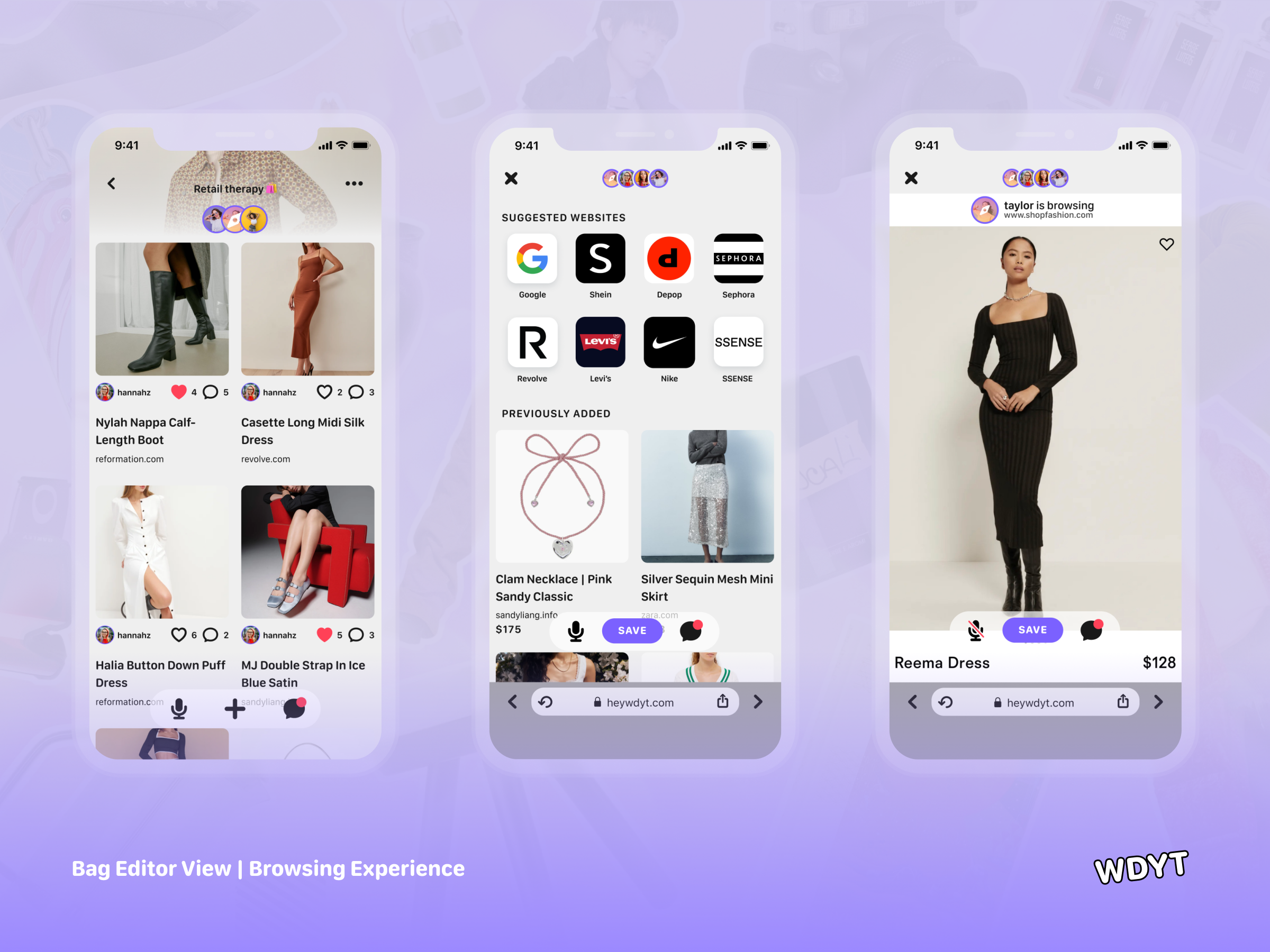
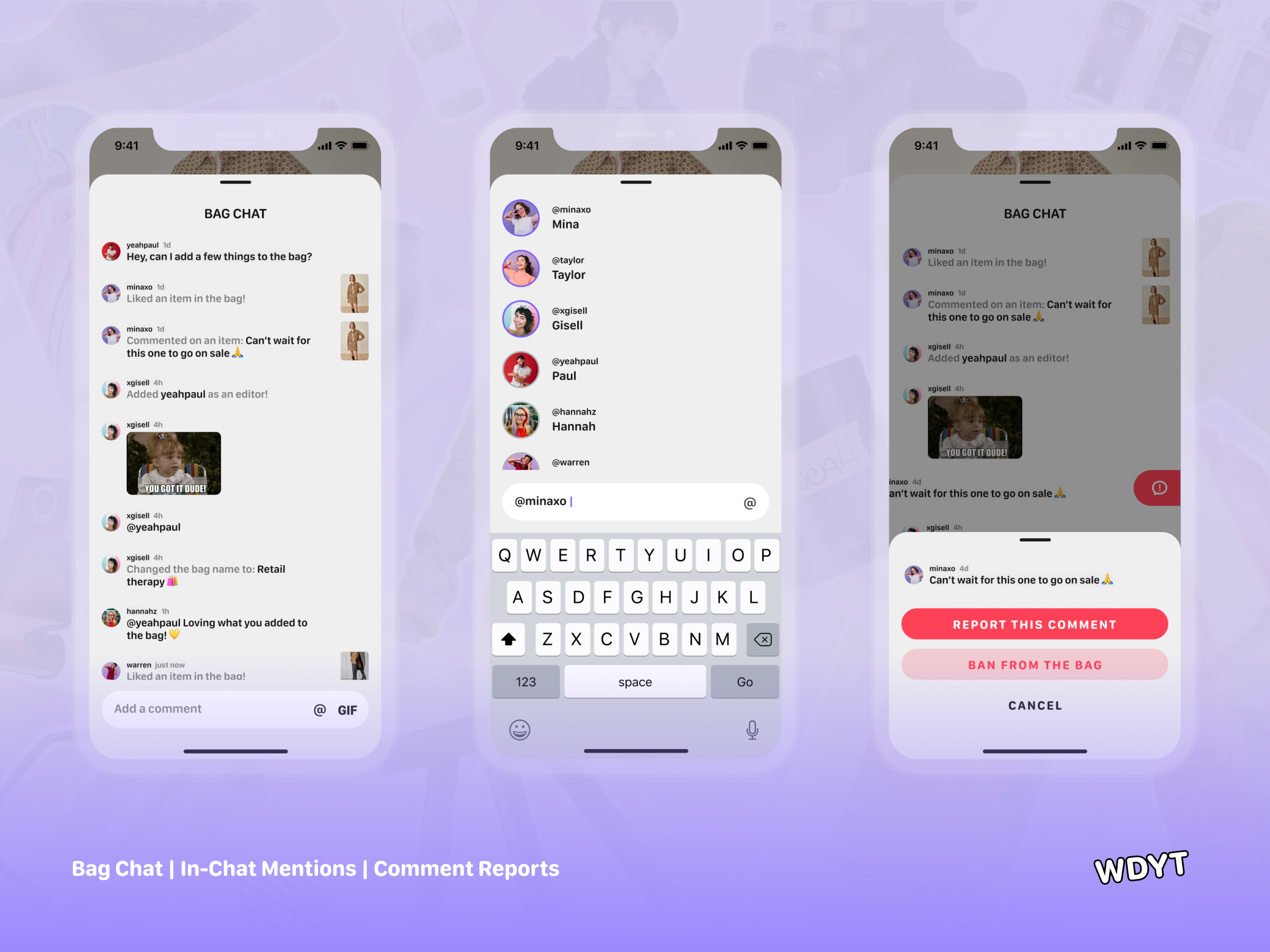
Voice and text chat both live inside the bag, and we extended the same permission model to cover them, so bag owners decide who can talk and who can type.
This ended up being one of the more useful decisions we made, because it's what made the influencer case work. An influencer can invite followers into a bag without being bombarded by a lot of different voices at once, since voice access has to be granted rather than assumed. It works the way Instagram Live, TikTok Live, and X Spaces work, which meant the model was already familiar to the people we were designing for and we didn't have to teach it.
Getting everyone into the bag at the same time
Voice and text chat both live inside the bag, and we extended the same permission model to cover them, so bag owners decide who can talk and who can type.
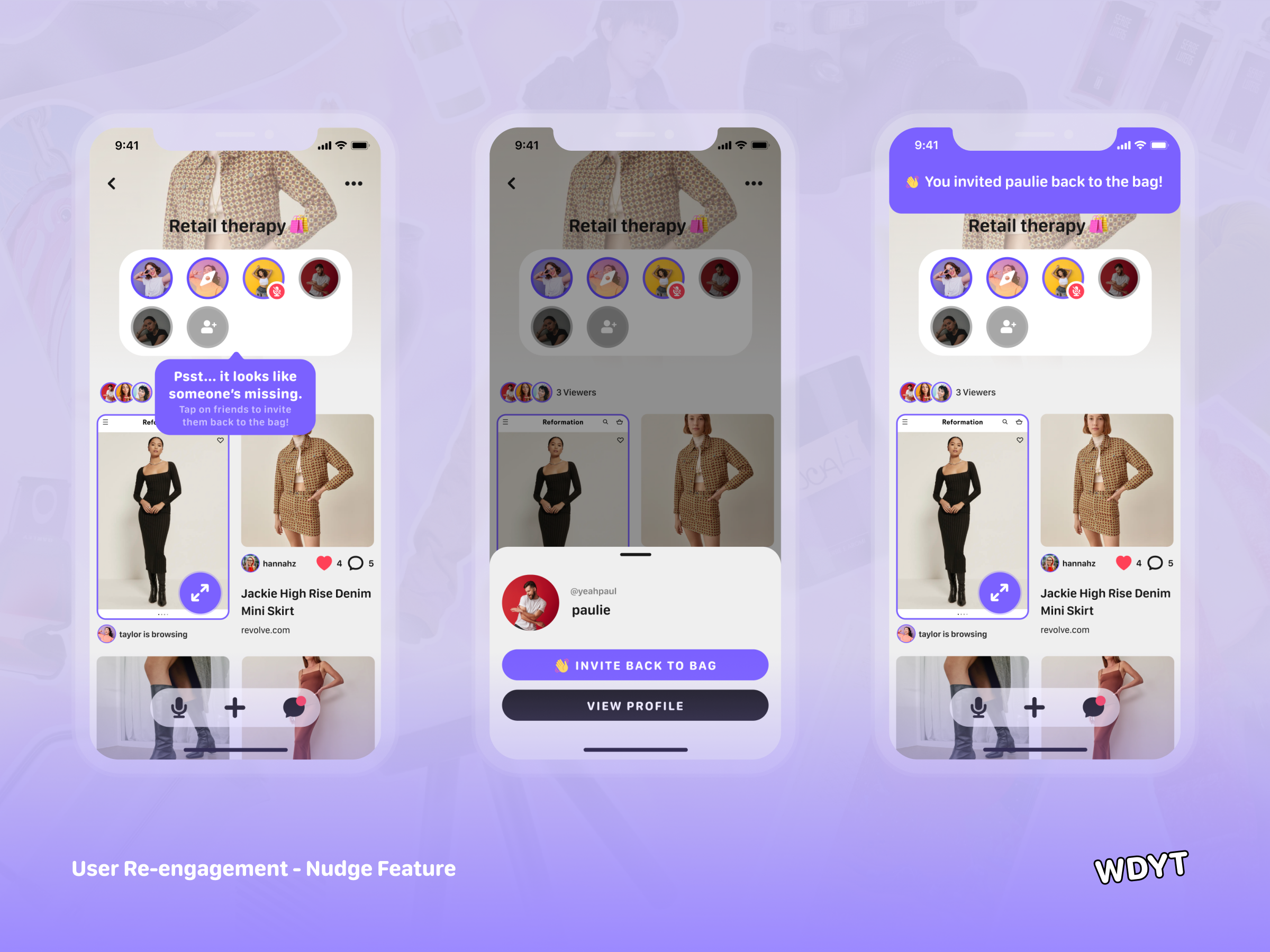
Building the real-time mechanics was one problem, but the harder one was getting people to actually show up together. Asynchronous bag editing was a feature, and it worked fine, but the experience is much better when everyone is in there at once, so we built a nudge system that sends a push notification out to a bag's contributors to pull them in to collaborate at the same time.
On cutting features and what I'd do differently
We spent a while playing with the idea of adding a video element to the experience. Between the potential privacy and exploitative risks and the technical constraints, we got uncomfortable with it, and when we looked closer at whether we actually needed video to solve the problem and meet our users' needs, we didn't think we did, so we cut it.
I would have really wanted to take more time to build out the actual shopping cart and the e-commerce side of the product, so that users could buy the items in their bags directly from the app. The collaborative part of the experience worked, but the bag stopped short of an actual purchase, and closing that gap would have opened up partnerships with brands and given the app a real path to making money.
More Info
Contact me to request more information about this project.